Pelvic Therapy Exercises You Can Do at Home

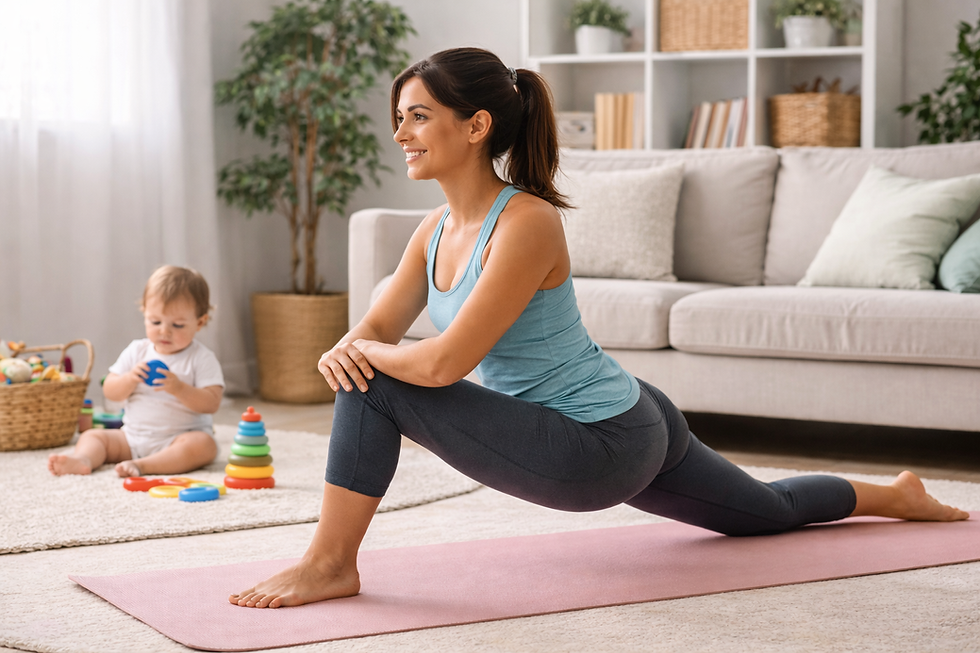
If you’re a mom experiencing tailbone pain when sitting, knee discomfort, or overall body tension months after giving birth — you are not alone.
Many moms assume postpartum pain should disappear after the first few months, but the truth is that your body continues healing well beyond the first year. At The Mommy Village, we believe in educating, supporting, and empowering moms through every stage of motherhood — including the parts no one talks about.
Let’s talk about why pelvic therapy matters and simple exercises you can safely do at home.
Why Pelvic Therapy Is Important After Pregnancy
During pregnancy and childbirth, your body experiences:
Hormonal changes that loosen ligaments
Increased pressure on your pelvic floor
Core and hip muscle weakening
Postural changes from carrying and caring for your baby
These changes can lead to:
Tailbone (coccyx) pain
Hip and lower back pain
Knee pain (including around the ACL)
Core instability
Pelvic floor tightness or weakness
Pelvic therapy focuses on restoring balance between your pelvic floor, core, hips, and lower body, helping reduce pain and improve mobility.
Blaming the Epidural? I did too.
Why it feels like the epidural caused the pain
1. Epidurals don’t affect the tailbone directly
The epidural is placed in the lumbar spine, not the coccyx
It does not damage the tailbone
Long-term coccyx pain from an epidural is very rare
So medically, the epidural itself is not the source of tailbone pain.
What actually happens (this part matters)
2. You couldn’t feel or adjust during labor
Because of the epidural:
You couldn’t feel pressure or pain signals
You may have stayed in one position too long
Your tailbone may have been under prolonged pressure
You couldn’t instinctively shift, move, or protect your body
This can lead to:
Coccyx bruising
Pelvic floor strain
Ligament overstretching
Postural issues that show up later
So the delivery mechanics, not the epidural itself, are often the cause.
3. Pelvic floor + core changes after epidural
After an epidural:
Pelvic floor muscles may take longer to “reconnect”
Core engagement can be delayed
Compensation patterns form (hips, knees, tailbone take over)
This explains why:
Sitting hurts
Standing up hurts
Knees or hips start acting up too
Everything is ghetto and crunchy
When epidural-related pain would be concerning
Talk to a provider if you had:
Burning, electric, or shooting pain
Numbness or tingling that never resolved
Weakness in legs
Pain directly at the injection site that worsens
What actually helps (and this is big)
✔ Pelvic floor physical therapy
✔ Tailbone-friendly sitting (U-shaped cushion)
✔ Gentle stretching + glute strengthening
✔ Posture correction
✔ Avoiding long sitting on hard surfaces
Many moms who say
“My epidural messed me up” actually experience huge relief once pelvic floor therapy starts.

Pelvic Therapy Exercises You Can Do at Home
Below are gentle, postpartum-friendly exercises designed to support pelvic health, relieve pain, and rebuild strength. These movements are safe for most moms but should never cause pain.
1. Pelvic Tilts
Purpose: Activate your core and support your pelvic floor
Lie on your back with knees bent and feet flat on the floor. Slowly tilt your pelvis upward, gently flattening your lower back against the floor. Release and return to neutral.
Tips:
✔ Focus on breathing
✔ Move slowly and intentionally
✔ Avoid arching your back
2. Glute Bridges
Purpose: Strengthen hips, glutes, and core stability
Lie on your back with knees bent. Press through your heels and lift your hips upward while squeezing your glutes. Hold briefly, then lower down with control.
Why it helps:
Strong glutes take pressure off your knees and tailbone.
3. Clamshells
Purpose: Stabilize hips and support knee alignment
Lie on your side with knees bent and feet together. Keeping hips stacked, slowly open your top knee, then close it back down.
Tips:
✔ Keep movements small
✔ Don’t roll backward
✔ Engage your core
4. Child’s Pose Stretch
Purpose: Release tension in the back and pelvic floor
Kneel on the floor, sit back toward your heels, and reach your arms forward. Breathe deeply into your belly and pelvic area.
This stretch is excellent for relaxation and pelvic floor release.
How Often Should You Do These?
10–15 reps per exercise
2–3 sets
3–5 days per week
Listen to your body — rest when needed
Extra Comfort Tips for Moms
✔ Use a cushion or donut pillow when sitting
✔ Apply ice to sore knees after activity
✔ Use heat on the tailbone or lower back to relieve stiffness
✔ Avoid high-impact workouts until strength improves
When to Seek Professional Help
While these exercises are helpful, you should consult a healthcare provider or pelvic floor physical therapist if you experience:
Pain that worsens over time
Numbness or tingling
Knee instability or swelling
Difficulty with daily activities
Pelvic floor physical therapy can be truly life-changing for many moms.
Reminder
You’re Not Broken. You’re Healing
At The Mommy Village, we want you to know this:
Your body didn’t fail you. It did something incredible.
Healing is not linear, and you deserve support, education, and grace as you navigate motherhood.
If this blog helped you, share it with another mama who needs the reminder.
Disclaimer: This content is for educational purposes only and does not replace medical advice. Always consult your healthcare provider before beginning any exercise program.
Comments